
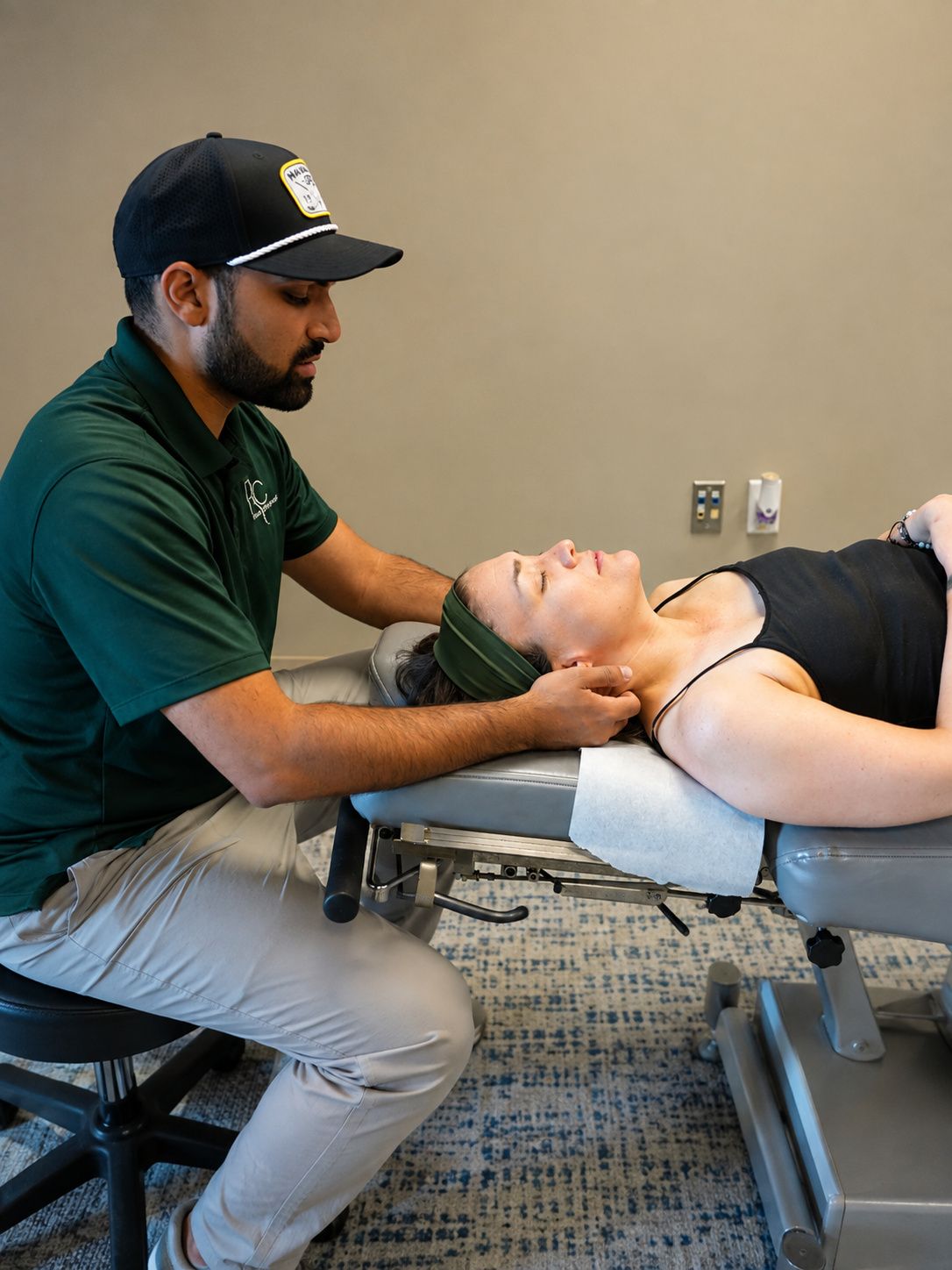
You get rear-ended on Kipling or C-470, trade insurance cards and drive home feeling fine. Two days later your neck is stiff and a headache has settled in at the base of your skull. Is a chiropractor the right next call? Here is what federal health agencies say about whiplash and spinal manipulation, what a personal injury visit usually involves, how to check a license in Colorado and how most Colorado auto policies pay for early care.
First, rule out an emergency
A chiropractic office is not the place to start if there are signs of a serious head injury. The Centers for Disease Control and Prevention says to call 911 or go to an emergency department after a bump, blow or jolt to the head if an adult has any of these danger signs:
- A headache that gets worse and does not go away
- Weakness, numbness, poor coordination, convulsions or seizures
- Repeated vomiting
- Slurred speech or unusual behavior
- One pupil larger than the other
- Growing confusion, restlessness or agitation, or not recognizing people or places
- Loss of consciousness, unusual drowsiness or being unable to wake up
The CDC also notes that some symptoms of a head injury may not appear for hours or days. If any of the signs above show up later, treat it as an emergency then, too.
Why your neck can hurt days later
The National Institute of Neurological Disorders and Stroke describes whiplash, also called a neck sprain or strain, as a soft tissue injury to the neck that most often follows a car accident. It can involve the joints, discs, ligaments, muscles and nerve roots. Neck pain and stiffness are the main symptoms. Headache, dizziness, burning or prickling sensations, and shoulder or back pain can also occur, and some people report trouble concentrating, irritability, poor sleep or fatigue.
Symptoms can start right away or be delayed for several days, the institute says, which is why feeling fine at the scene does not settle the question. The outlook is generally good: most people recover within three months, though some have lingering neck pain and headaches.
What the research says about chiropractic care
Spinal manipulation, a controlled thrust applied to a joint of the spine, is the technique most people associate with chiropractors, who perform most of it in the United States. The National Center for Complementary and Integrative Health, part of the National Institutes of Health, sums up the evidence this way: manipulation may help acute neck pain, though the research is limited, and for chronic neck pain manipulation or gentler mobilization may reduce pain and improve function, based on low to moderate quality evidence.
On safety, the center says mild to moderate side effects such as temporary soreness, stiffness or headache are common and usually pass within 24 hours. Serious problems are rare. Manipulation of the neck has been linked to cervical artery dissection, a rare tear in a neck artery that can cause a stroke. The center says the incidence appears to be low and that experts disagree about whether manipulation causes it. Tell any provider about your full health history before care begins.
Manipulation is also only one tool. The treatments the neurological institute lists for whiplash include range of motion exercises, physical therapy, heat and pain medication.
What a personal injury visit usually involves
One local example: Raise Chiropractic in Littleton, the practice of Dr. Neal Surani, DC, describes its approach on its page about auto accident and personal injury care in Littleton. The clinic says it looks at the full pattern of symptoms after a crash, and it lists whiplash, neck pain and stiffness, lower back pain, herniated or bulging discs, shoulder pain, headaches and dizziness among the injuries it sees. Care there can combine chiropractic with massage therapy and physical therapy, and the practice also lists shockwave, PEMF and laser therapy.
Its page on whiplash evaluation and treatment walks through the exam: a review of the collision and the timeline of symptoms, then checks of neck and upper back motion, muscle tension, strength, reflexes and sensation. The page says adjustments are used only when the exam supports them, and that the provider explains techniques and alternatives first. The practice advertises free whiplash evaluations and says walk-ins may be available, so call ahead: (720) 432-5140. The office is at 8204 S. Kipling Pkwy., Suite C130.
Disclosure: Raise Chiropractic is a Holland Health Marketing client. Our profile of the practice is in the Local Business Spotlight.
How to check a chiropractor’s license in Colorado
Chiropractors here are licensed through the Board of Chiropractic Examiners, part of the state’s Division of Professions and Occupations. You can confirm a license with the division’s free online license lookup, and complaints go through the division’s File a Complaint page. The board’s office number is 303-894-7800.
Who pays for early care
Your own auto policy probably carries a first layer of medical money. The Colorado Division of Insurance says $5,000 of medical payments coverage, known as MedPay, is included in a policy unless you reject it. It pays reasonable health care expenses for you and your passengers regardless of who caused the crash, it pays before your health insurance, and it can be applied to your health plan’s deductible or coinsurance. Our explainer on how the $5,000 MedPay works after a crash covers the details, including the 30-day trauma reserve.
Before a first visit anywhere, ask how the office bills: MedPay, health insurance or self-pay. Policies differ by clinic.
Keep records, and know the three-year clock
Write down when each symptom started, and keep visit dates, exam findings and bills in one place. Colorado law gives three years to file a lawsuit for bodily injury or property damage arising from the use of a motor vehicle, and a clear record matters long before that. For the reporting rules and the steps to take at the scene, see our guide to what you are required to do after a car crash in Colorado.
Questions to ask before the first visit
The federal complementary health center suggests asking any chiropractor about the points below, and sharing your medical conditions and every medication and supplement you take.
- What are your education and licensure, and do you have specific training with injuries like mine?
- How many visits do you expect I will need?
- What will it cost, and what will insurance cover?
Two more worth adding after a crash: what the first exam includes, and how the office will coordinate with your doctor if symptoms do not improve. If you are weighing other hands-on options, our guide to who can do dry needling in Colorado covers that treatment.
Sources
- Centers for Disease Control and Prevention: Signs and Symptoms of Traumatic Brain Injury.
- National Institute of Neurological Disorders and Stroke: Whiplash.
- National Center for Complementary and Integrative Health: Spinal Manipulation: What You Need To Know.
- Colorado Division of Insurance: Auto Insurance.
- Colorado Division of Professions and Occupations: Board of Chiropractic Examiners.
- Colorado Revised Statutes: section 13-80-101 (three-year limitation for motor vehicle actions).
This is general information, not medical advice.
More like this: Health · Learn · Littleton · How MedPay works after a crash · What to do after a car crash in Colorado · Dry needling in Colorado


