
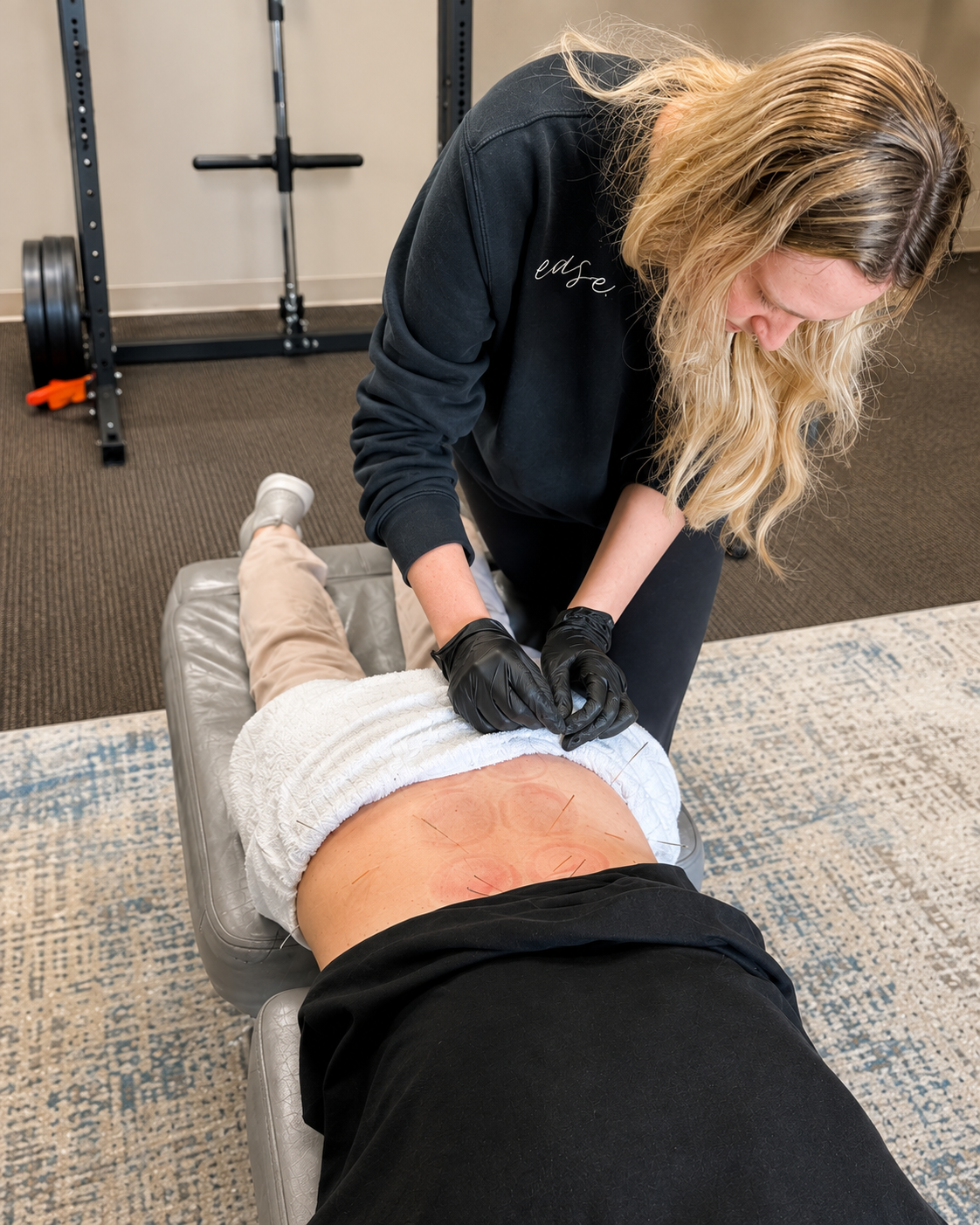
Dry needling has gone from niche to routine at physical therapy and chiropractic clinics along the Front Range, and it is one of the first things runners, lifters and desk workers with stubborn neck or back tightness hear about. It also raises fair questions: who is allowed to put needles in you, how much training do they need, and what does it actually feel like? Colorado’s licensing boards answer the first two in writing. Here is a plain-language guide.
What dry needling is (and is not)
Dry needling uses thin, solid filiform needles, the same kind used in acupuncture, placed into or near trigger points: tight, tender knots in a muscle. Colorado’s physical therapy rules describe it as an intervention based on Western medical concepts that requires an examination and diagnosis and targets specific anatomic structures. Cleveland Clinic draws the same line against acupuncture: acupuncture comes from Eastern medicine and is performed by licensed acupuncturists, while dry needling is a Western, muscle-focused technique used as part of a broader treatment plan.
Providers use it for problems like neck and upper-trap tension, low back pain, shoulder issues, tendon irritation and headaches that start in the muscles. It is rarely the whole treatment; it usually sits alongside exercise, manual therapy or adjustments.
Physical therapists: 50 hours of training, written consent
Under the State Physical Therapy Board’s rules, a Colorado physical therapist needs at least 50 hours of dry needling education, with at least 40 of those hours in person. A therapist may start using the technique after completing 30 hours, but only within the scope of the coursework finished so far, and the full training has to be completed within four years. Areas where a needle could cause a collapsed lung or serious nerve or blood-vessel injury require additional education and experience in lower-risk areas first.
Two more rules matter to patients. First, the therapist must have your written informed consent, and the consent has to cover the risks and benefits, specifically including pneumothorax (a punctured lung), neurovascular injury and infection. Second, dry needling cannot be delegated: the qualified physical therapist has to do it personally, not an assistant or aide. The chart note should describe the technique, the tissues treated and how you responded.
Chiropractors: 24 or 46 hours plus two years of practice
Colorado’s Board of Chiropractic Examiners also permits dry needling, which its rules call intramuscular stimulation (IMS). A chiropractor who already holds the board’s acupuncture certification needs at least 24 hours of face-to-face dry needling coursework plus two years of acupuncture practice. A chiropractor without that certification needs at least 46 hours of face-to-face coursework and two years of licensed practice. As with physical therapists, the chiropractor must have written, informed consent for each patient.
How to check a provider
- Look up the license. The Colorado Division of Professions and Occupations runs a free license lookup for physical therapists and chiropractors.
- Ask about the training. It is reasonable to ask how many hours of dry needling coursework your provider completed and with which program. Many list a certification after their name.
- Expect a consent form. If no one asks you to sign one before the first needle, ask why.
What a session usually feels like
The needle itself is thin, and many people barely feel it go in. When it reaches a trigger point, the muscle often gives a quick twitch or cramp that can be surprising. According to Cleveland Clinic, soreness during and after treatment is the most common side effect, and some people notice stiffness, bruising where the needles went in, fatigue for a day or so, or lightheadedness. Drink water, keep moving gently and tell your provider if soreness lingers.
Talk to your doctor before trying it if you are pregnant, immunocompromised, on blood thinners or very needle-phobic. Cleveland Clinic also notes it is generally not recommended for children under 12.
What it looks like at a local clinic
In Littleton, Raise Chiropractic’s dry needling page is a useful example of how clinics combine it with other care. The practice lists both a chiropractor and a physical therapist with dry needling credentials, describes 30- to 45-minute sessions that pair needling with adjustments and movement work, and names the problems it most often treats, from neck and upper-trap tension to hip flexor strains and sciatica-like symptoms. Whatever clinic you choose, the questions above are the same.
Disclosure: Raise Chiropractic is a Holland Health Marketing client.
Sources
- Colorado State Physical Therapy Board, Physical Therapy Licensure rules (4 CCR 732-1)
- Colorado Board of Chiropractic Examiners rules (3 CCR 707-1)
- Colorado Division of Professions and Occupations, Physical Therapy program
- Cleveland Clinic, Dry Needling
- Raise Chiropractic, Dry Needling
More like this: Learn: Health · Raise Chiropractic spotlight · Littleton · Wildcat Mountain Trail Races (Oct. 3) · Trick or Trot 5K (Oct. 24)
This is general information, not medical advice.


