
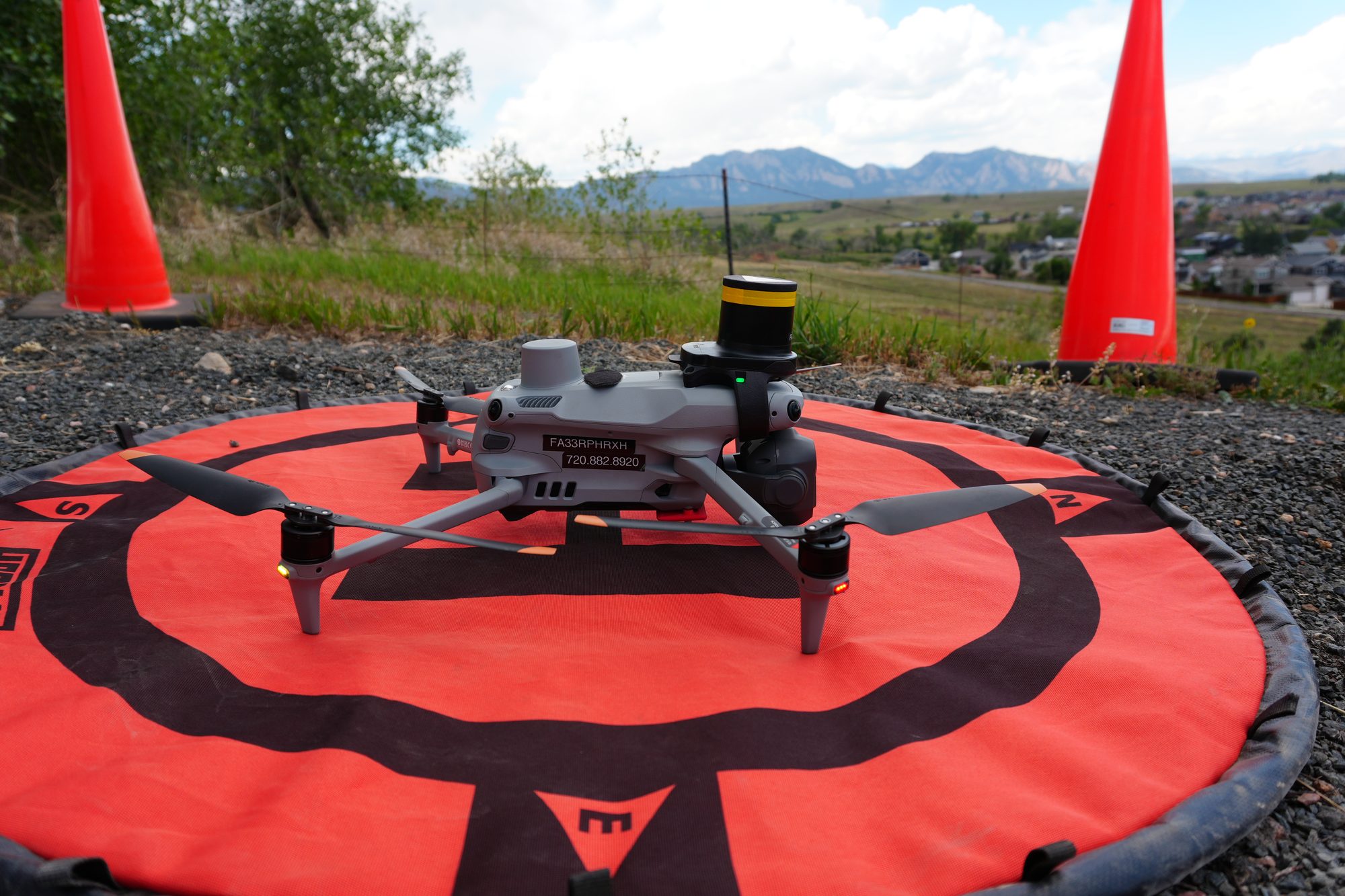
If a drone is on your family’s holiday list this year, it helps to know the rules before the box is opened. Before anyone heads to the backyard or the park, a few federal rules apply from the very first flight, even if the drone is just for fun. Here is what the Federal Aviation Administration (FAA) asks of a new recreational flyer, what is different in the Denver metro, and when a flight stops counting as recreational.
Does a drone for fun need to be registered?
It depends on the weight. The FAA says you must register a drone that weighs 250 grams (0.55 pounds) or more. Drones under that weight that are flown only for fun do not need registration. The weight is usually printed on the box or in the manual, so check it before you wrap it.
According to the FAA’s drone registration page, recreational registration:
- Costs $5, covers every drone in your inventory and is good for three years.
- Is done online through the FAA’s DroneZone site. You will need a mailing address, email, phone number, the drone’s make and model, its Remote ID serial number if it has one, and a credit or debit card.
- Requires the owner to be at least 13. If the drone is a gift for a younger child, a person 13 or older registers it.
- Comes with a certificate you must have with you, on paper or on your phone, whenever you fly. The registration number also has to be marked on the outside of the drone.
Registration under the recreational option cannot be used later to fly for work, which comes up again below.
What is the TRUST test, and does a beginner really have to take it?
Yes. The FAA says recreational flyers are required by law to pass The Recreational UAS Safety Test, known as TRUST, and to carry proof when they fly. The good news, per the FAA’s TRUST page:
- It is free and online, offered through a list of FAA-approved test administrators.
- Every question can be corrected until you get it right before the certificate is issued.
- The test administrators do not keep a record of your certificate. Save it, print it or keep it on your phone, because if you lose it you have to take the test again.
For a family, it can make a good first activity together on gift day, before anyone flies.
What is Remote ID?
Remote ID lets a drone in flight broadcast identification and location information that others can receive. The FAA’s Remote ID page says every drone that is required to be registered, including those flown for fun, has to comply. There are three ways to do that: fly a drone built with standard Remote ID, attach an FAA-accepted Remote ID broadcast module, or fly only inside an FAA-Recognized Identification Area. The FAA suggests having the Remote ID serial number handy when you register; it may be on the drone, on the controller or in a start-up menu.
The basic rules for flying for fun
The FAA’s recreational flyer page sums up the rules this way:
- Fly only for recreation, meaning personal enjoyment.
- Keep the drone within your own visual line of sight, or use a visual observer standing right next to you.
- Give way to and do not interfere with other aircraft. The FAA notes that other aircraft fly low too, not just near airports.
- Stay at or below 400 feet in uncontrolled airspace.
- In controlled airspace around airports, fly only with prior FAA authorization, through LAANC or DroneZone, and only at the altitudes the FAA allows.
- Follow the safety guidelines of an FAA-recognized community-based organization.
Why the Denver metro takes extra care
Front Range skies are busy. Dragonfly Aerials, an Arvada drone company that flies commercial jobs across the metro, says on its Denver services page that much of Denver sits inside controlled airspace tied to Denver International and the surrounding airports. It also checks temporary flight restrictions around Coors Field and Empower Field on game days before every Denver flight.
For a recreational flyer, the FAA’s tool for this is B4UFLY. The FAA has approved several companies to offer B4UFLY apps and websites that show where recreational flyers can and cannot fly, including controlled airspace, airports and temporary flight restrictions for special events, with a clear indicator of whether it is OK to fly at a spot. Check it before every flight, not just the first.
Where you take off matters too. Many Front Range park and open space agencies limit or ban drone launches on their land. Our guide to whether a drone can legally fly over your house in Colorado lists the park rules we found for Jefferson County, Lakewood, Littleton-area parks and others, and how to report a drone that is flying dangerously.
When a flight stops being just for fun
This is the part that surprises people. The FAA says getting paid or not is not what decides whether a flight is recreational. Its examples of flights that fall under the commercial rule, called Part 107, include taking photos to help sell a property, roof inspections, and taking pictures of a high school football game for the school’s website. Even volunteering your drone for a nonprofit can count. The FAA’s advice: when in doubt, assume Part 107.
To fly under Part 107, a pilot has to be at least 16, pass the FAA’s knowledge test at an approved testing center and earn a Remote Pilot Certificate, then register the drone separately under Part 107.
So if the real reason for the new drone is to check the roof after a storm or to photograph a house you are listing, it is usually simpler to hire a certified pilot. Our earlier piece on whether to get your roof inspected before winter covers what a drone roof inspection shows and the questions to ask.
A certified drone company in the Denver area
Dragonfly Aerials is based in Arvada and serves the Denver metro and Front Range. Founder Mike Brown is a former construction superintendent, and the company lists itself as FAA Part 107 certified and $1 million insured, with a certificate of insurance available on request. Its services include drone facade and roof inspections, construction progress documentation, mapping and thermal imaging. Its Denver page lists contractors, developers, property owners and managers, roofing contractors and insurance and restoration teams among the clients it flies for. Its post on why FAA certification and insurance matter explains what a certified, insured operator handles. To ask about a project, call or text 720-882-8920 or use its contact page. Its listed hours are Monday through Saturday, 9 a.m. to 5 p.m. Disclosure: Dragonfly Aerials is a Holland Health Marketing client.
You can read more on our Local Business Spotlight: Dragonfly Aerials. And if the new pilot in your house would rather watch than fly on a cold night, our Denver and Wheat Ridge holiday lights guide has plenty of places to see the season from the ground.
Sources
- Federal Aviation Administration: Recreational Flyers and Community-Based Organizations
- Federal Aviation Administration: How to Register Your Drone
- Federal Aviation Administration: The Recreational UAS Safety Test (TRUST)
- Federal Aviation Administration: Remote Identification of Drones
- Federal Aviation Administration: B4UFLY
- Federal Aviation Administration: Certificated Remote Pilots including Commercial Operators
- Dragonfly Aerials: Commercial drone services in Denver
Rules change, so check the FAA pages above before you fly. This is general information, not legal advice.
More like this: Home + Property · Learn · Denver · Local Business Spotlight: Dragonfly Aerials · Can a drone legally fly over my house in Colorado?


