
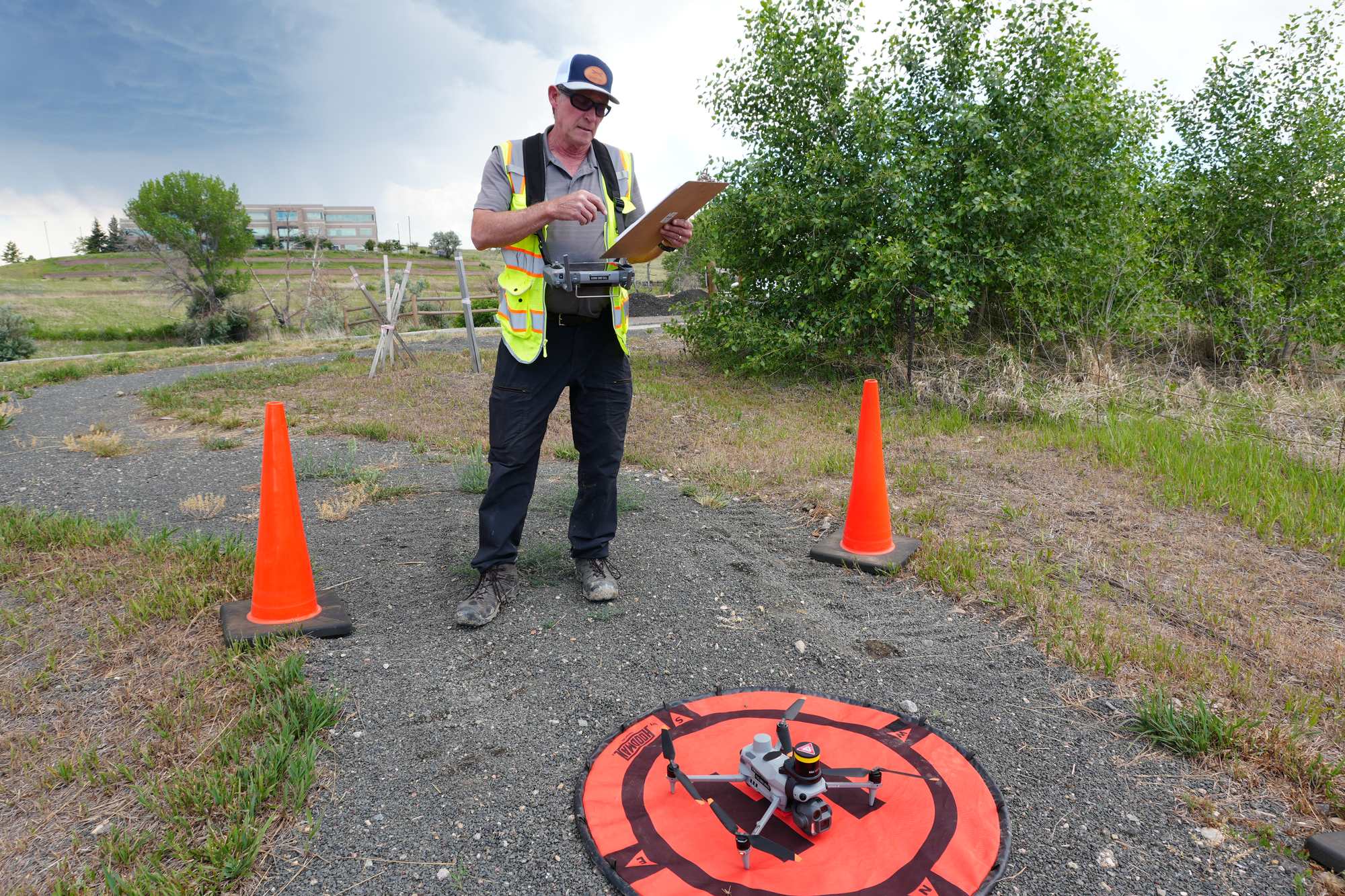
A drone hanging over the backyard fence feels like it ought to be against the law. In most cases the flight itself is not. The air above your roof is regulated by the Federal Aviation Administration, not by you or your city. What you do have are privacy, harassment and trespass laws, park rules that control where drones can take off, and a clear path for reporting a pilot who is flying dangerously.
Who controls the air above your house
The FAA’s 2023 fact sheet on state and local drone rules says states and local governments may not regulate aviation safety or airspace efficiency, but generally may regulate outside those fields. In its public Q&A on drones, the agency says people can fly drones in most locations below 400 feet, and that pilots must operate so they do not pose a hazard to people or property. So a drone crossing over a home is not, by itself, illegal.
The same fact sheet draws a line where a flight starts to interfere with life on the ground. Among the laws it says a state or city can likely enforce are rules against drone operations in the immediate reaches of a property that substantially interfere with the owner’s use and enjoyment of it, along with general laws on privacy, voyeurism, trespass and harassment. The FAA is plain about its own limits: it does not regulate privacy, it says, but local privacy laws may apply to drone operations.
What the pilot is required to do
- Hobby pilots must fly only for recreation, keep the drone within their visual line of sight, stay at or below 400 feet in uncontrolled airspace, and pass The Recreational UAS Safety Test, known as TRUST, and carry proof of it.
- Any recreational drone that weighs more than about a half-pound must be registered with the FAA, with the registration number marked on the outside. Registered drones must also broadcast Remote ID information.
- Anyone flying for work or business flies under the FAA’s Small UAS Rule, called Part 107, and needs a Remote Pilot Certificate from the FAA.
- A drone flown at night must be equipped with the required lights.
What Colorado law adds
A Legislative Council Staff issue brief prepared for the Colorado General Assembly in October 2024 sums up the state’s position: states may regulate drones as long as their laws do not conflict with FAA regulations. It lists three Colorado rules. State law prohibits using a drone in a way that obstructs a peace officer, firefighter, emergency medical services provider, rescue specialist or volunteer and puts public safety at risk (Section 18-8-104 of the Colorado Revised Statutes). State regulations prohibit operating drones in state parks except in designated areas, and they prohibit using a drone to look for, scout or detect wildlife as an aid to hunting.
The brief does not list a Colorado statute written specifically about drones and backyard privacy. That leaves the general privacy, trespass and harassment laws the FAA fact sheet points to, and they are enforced by local police and prosecutors, not by the FAA.
Where drones cannot take off on the Front Range
Cities and counties cannot close the sky, but the FAA fact sheet says they can generally regulate where drones take off and land, and many Front Range park agencies do. These are the rules posted on the agencies’ own pages as of Oct. 1, 2026:
- Jefferson County Open Space: drone use is banned in, on, from and over its lands and waters. The county cites noise, privacy concerns and effects on wildlife.
- Lakewood: no launching, landing or operating a drone from city parks, recreation or open space areas without an approved drone use permit, and no drone use at Bear Creek Lake Park or William F. Hayden Park. Outside those areas, the city says no permit is required.
- Arvada: the city says it does not currently have a local ordinance regulating drone use, and that state and federal rules still apply in parks and other public spaces.
- Golden: the city says drone permits are on hold while it reviews its policies, and that operating a drone in the city does not currently require one.
- Littleton area: South Suburban Parks and Recreation prohibits launching and operating drones on its property without a district permit, and does not allow flying over crowds in parks or on occupied trails.
- Fort Collins: drones and radio-controlled aircraft are prohibited in city natural areas; the city cites Municipal Code Section 23-193(a)(6) for recreational use.
- Larimer County and Boulder County: both counties’ open space rules prohibit recreational drone flights on their lands.
This is not a complete list. Denver and Wheat Ridge publish their own park rules, which we could not load for this article, so check with the parks department before flying in a city park.
If a drone is bothering you
- If the flight looks dangerous or the drone is being used to commit a crime, the FAA says to report it immediately to local law enforcement.
- If the pilot simply is not following FAA rules, the agency says you may contact your local flight standards district office. The Denver office’s number is 303-342-1100.
- Note what you can see. The FAA’s pocket guide for police who respond to drone complaints tells officers to locate the operator and to note the type of device and its size, shape and color.
- Do not try to knock it down. Asked whether you can shoot down a drone over your property, the FAA answers no: it is illegal under federal law to shoot at an aircraft, and doing so could bring a civil penalty and criminal charges.
When the drone is working, not snooping
Many of the drones that fly low over neighborhoods are on a job, photographing a roof, a facade or a construction site. Those flights fall under Part 107. Dragonfly Aerials, an Arvada company that documents buildings and job sites, spells out what a licensed, insured drone operator handles before a flight: it says every flight is piloted by a licensed remote pilot, that it handles airspace authorization, safety planning and FAA compliance, and that it carries $1,000,000 in general liability coverage with a certificate of insurance available on request. Its page on drone roof and facade inspections notes that flights are subject to FAA regulations, local airspace restrictions and safe weather conditions.
If you are the one hiring a drone operator, those are fair things to ask any company for: the pilot’s FAA remote pilot certificate and proof of insurance.
Sources
- Federal Aviation Administration: What To Know About Drones (Jan. 14, 2025); State and Local Regulation of Unmanned Aircraft Systems Fact Sheet (July 14, 2023); Recreational Flyers; Become a Certificated Remote Pilot; How do I report a drone sighting?; Denver Flight Standards District Office; and the law enforcement drone response card.
- Colorado Legislative Council Staff: Drone Use and Regulation in the Public Sector (October 2024).
- Local rules: Jefferson County Open Space regulations; City of Lakewood Community Resources rules; City of Arvada parks FAQ; City of Golden drone permit page; South Suburban park and trail rules; Fort Collins Natural Areas; Larimer County Natural Resources regulations; and Boulder County’s open space drone policy.
Disclosure: Dragonfly Aerials is a Holland Health Marketing client. Read Dragonfly Aerials’ Colorado Local profile.
Rules change, and local ordinances vary from city to city. This is general information, not legal advice.
More like this: Home + Property · Learn · Legal + Money · Arvada · What you are required to do after a car crash in Colorado


