
Ask anyone who has built or remodeled along the Front Range and they will tell you the calendar has a hole in it. Concrete pours get fussy below freezing, excavators sit when the ground is frozen, and the daylight you need to see what you are doing shrinks to about nine hours. Many Denver-area projects slow down or stop between November and March, and the question owners ask is a practical one: what should we write down, photograph and measure before the snow covers everything, so that nobody is arguing in spring about what was there in the fall?
Why November is the deadline
Denver’s first lasting snow is unpredictable, but November is when the odds turn. The National Weather Service office in Boulder lists the 1991-2020 normal November snowfall at Denver International Airport as 7.3 inches, with a normal monthly temperature of 39.4 degrees; the snowiest November on record dropped 42.5 inches in 1946, and some Novembers see almost nothing. The point for a site is not the average. It is that once a storm does land, the ground you need to document is hidden, and it may not reappear cleanly until the thaw. A record made on a dry, snow-free day in early November is worth far more than one made after the first big storm.
What the pre-winter record should capture
Think of it as a snapshot of the ground, the piles and anything about to be buried. Dragonfly Aerials, the Arvada drone-services company that documents construction sites across the Denver metro, lays this out in its post on using a 3D site model to lock in conditions before a Colorado winter pause. The things worth measuring before the gap are the grading and earthwork (so cut and fill quantities are on record), stockpile volumes calculated against a base surface, and utility trenches and conduit runs captured before backfill, since those disappear for good once covered. The company’s phrase for the payoff is simple: “Two models tell you what moved in between.” When crews come back in March, a dated fall model lets everyone compare surfaces and see what settled, washed out or went missing over the winter, and the same record feeds the progress reports and pay-draw packages that lenders ask for while a project sits idle.
For a homeowner acting as their own owner’s representative, the same list applies at a smaller scale: photographs of the foundation and any exposed framing, the location and condition of material stored on site, where the temporary power and water are, how the erosion controls and the fence were left, and a dated note of who last worked and what they finished. A folder of dated images, kept somewhere both you and your contractor can see, settles most spring arguments before they start.
If you fly it, fly it before the storm and at midday
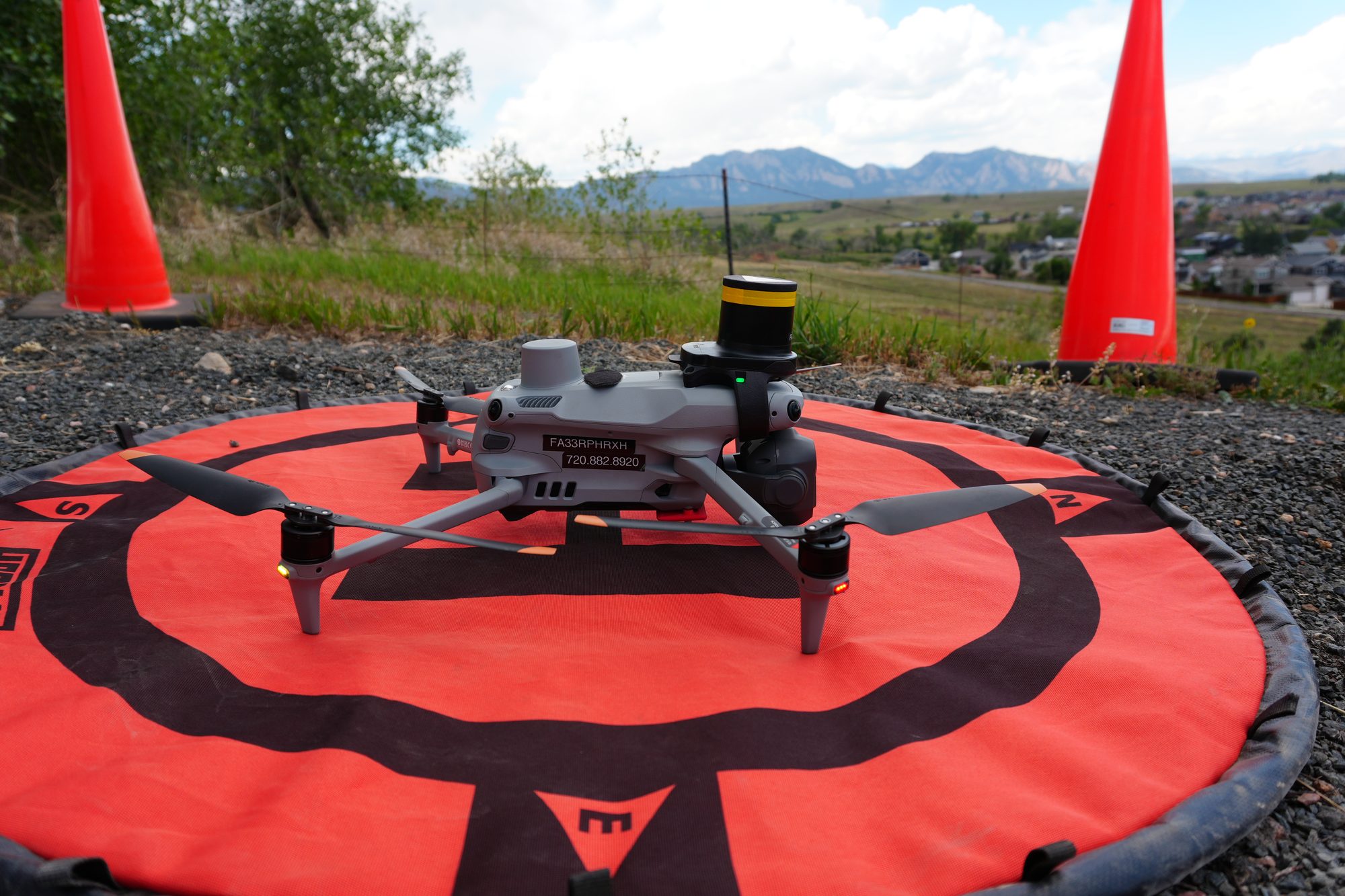
Aerial capture has become the standard way to get a whole site in one dated record, and winter changes how it is done. In its Nov. 2 post on flying Colorado construction sites in winter, Dragonfly explains that the FAA’s Part 107 visibility and cloud-clearance rules do not relax in cold weather, so falling or blowing snow and low ceilings can scrub a flight the morning it was scheduled. Cold also shortens battery life, and the low winter sun throws long shadows that hide detail on north-facing walls and in excavations, which is why the company recommends flying around midday and keeping capture times consistent from visit to visit. Its advice for owners is to “Schedule a window, not a day,” especially if a lender’s draw package is assembled around the 20th of the month, and to get a clean, snow-free capture before the first significant storm rather than after it. Deliverables typically come back within two or three business days, and Dragonfly is plain that an aerial record does not replace field inspections, engineering judgment or a licensed survey where one is legally required. Disclosure: Dragonfly Aerials is a Holland Health Marketing client.
Keeping people safe on a winter site
Some work continues through the pause, and the federal Occupational Safety and Health Administration’s winter weather guidance reads like a checklist for a Colorado job site. Clear snow and ice from walkways and apply deicer as soon as possible after a storm. Anyone walking on snow or ice should wear insulated, water-resistant boots with good treads and take short, slow steps. Before anyone goes up to clear snow from a roof or an elevated deck, OSHA says to consider whether the work at height can be avoided at all, to plan snow removal in advance, and to provide the required fall protection and training; its warning to “Use extreme caution when working near power lines” applies doubly when ladders are iced. OSHA also notes that weather-related crashes cause more than 6,000 deaths and 480,000 injuries a year, and tells drivers near freezing to drive as if the road is already ice. On a site that means scheduling deliveries for daylight and giving the plow a clear path to the laydown area.
The short version
Pick a dry day in the next week or two, before the November averages catch up with you. Record the ground, the piles and anything about to be buried, in measurable form if the project is big enough to have a lender watching it. Date everything, store it where the owner, the builder and the bank can all see it, and plan the spring restart around comparing that record with a new one. For related reading, see our guide to where a Colorado house loses heat in winter and what a thermal scan shows, the rest of our Home + Property articles, and our Local Business Spotlight on Dragonfly Aerials.
Sources
- National Weather Service Boulder, Denver November climate summary (1991-2020 normals for November snowfall and temperature)
- OSHA, Winter Weather (walkways, footwear, roof snow removal, fall protection, winter driving)
- Dragonfly Aerials, Flying Colorado Construction Sites in Winter (Nov. 2, 2026)
- Dragonfly Aerials, Capture Before the Snow (Oct. 19, 2026)
More like this: Learn · Home + Property · Denver · Arvada · Dragonfly Aerials · Where is my house losing heat this winter?


